


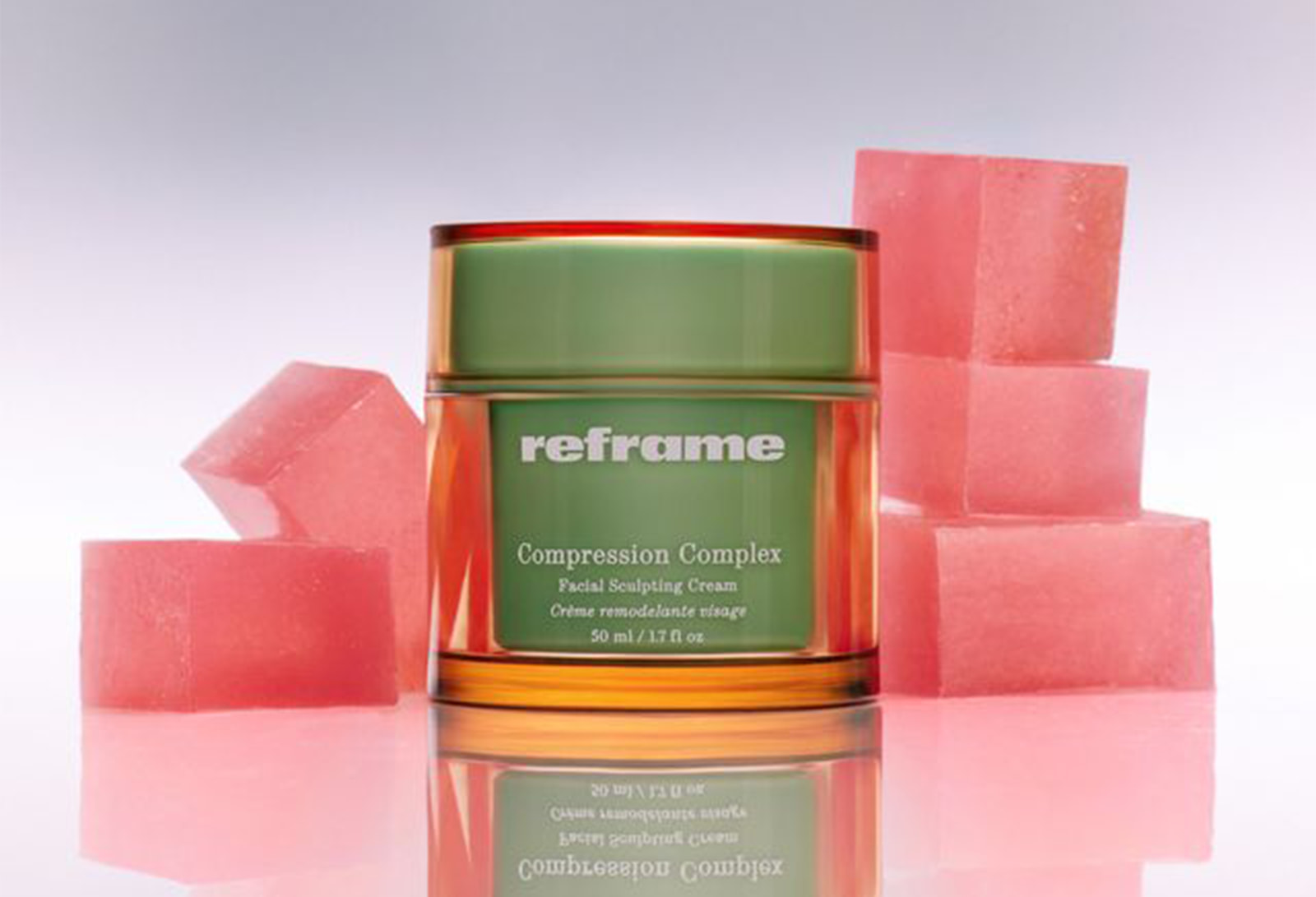
Reframe Beauty launched in May 2025 with three core products: the Pigment Processor, a daily brightening serum priced at $115; Compression Complex, a facial sculpting moisturizer for $95; and Circadian Cream, which retails at $135. Its founder, Savannah James (wife of famed basketball player LeBron James) partnered with beauty entrepreneur Nick Axelrod-Welk, co-founder of Nécessaire, to build it.
The brand entered a difficult market for famous founders. Drew Barrymore’s Flower Beauty closed after 13 years in September 2025, and that June, Kate Moss’s Cosmoss had ceased operations, and SKKN by Kim officially closed. Overall demand is still growing. According to Circana, US prestige beauty dollar sales rose 4% year over year (YoY) to $36 billion in 2025. But that growth is spread across more brands. Total beauty spending can rise 4% to 5% while the average brand’s share of it shrinks.
James does not present Reframe Beauty as a celebrity brand. She has no formal skincare training and calls herself an avid consumer who shops Boots in the UK and Olive Young in Korea. The brand began with her daughter, Zhuri, who told her at around age six, “Mom, I want to be just like you.” James had spent years raising her family out of the public eye, and the comment led her to reassess what she wanted to do. She found gaps on the shelf.
James knows a famous name can count against a beauty brand. She says celebrity-backed lines are often seen as “something that is just done because they can do it and not necessarily because there’s a purpose behind it.” Her answer has been to build the brand around product development. “I really spent my time going and doing research,” she told BeautyMatter.
Much of that research happened in Korea. James made several trips to Seoul and sat in innovation meetings with ingredient suppliers, looking for ingredients that were new and different. “I took my daughter, I took my team, like, we had an amazing time.” The products contain Korean ingredients like lespedeza capitata flower extract, and one of Reframe Beauty’s two manufacturers is based in Korea. That puts the brand close to a fast-growing source of supply: Korea exported a record $11.4 billion of cosmetics in 2025, up 11.8%, and the US became its largest export market, with sales up 15% to $2.2 billion. Exports reached $7 billion in the first half of 2026, up 27.3% YoY.
Each product starts from a story. “I also like to bring things to the market that don’t necessarily exist, as we’re telling stories.” Circadian Cream is her main example. It uses 3% Korean lespedeza capitata flower extract, which the brand says works with the skin's natural overnight repair cycle. “So, we’ve all heard of night creams. We use them. We love them. We need them, right? But I’ve never heard of an ingredient that actually works with your circadian rhythm.” She said the product works “while you’re sleeping …[and] while you’re awake.”
Design is the other part of the strategy. Reframe uses bright colors, and its bottles and jars are double-walled. James wanted a different look from performance skincare, which she says is “usually stark, white and silver, and not fun.” Behind both choices, she said, is “making sure that I’m not putting something into the world to just do it.”
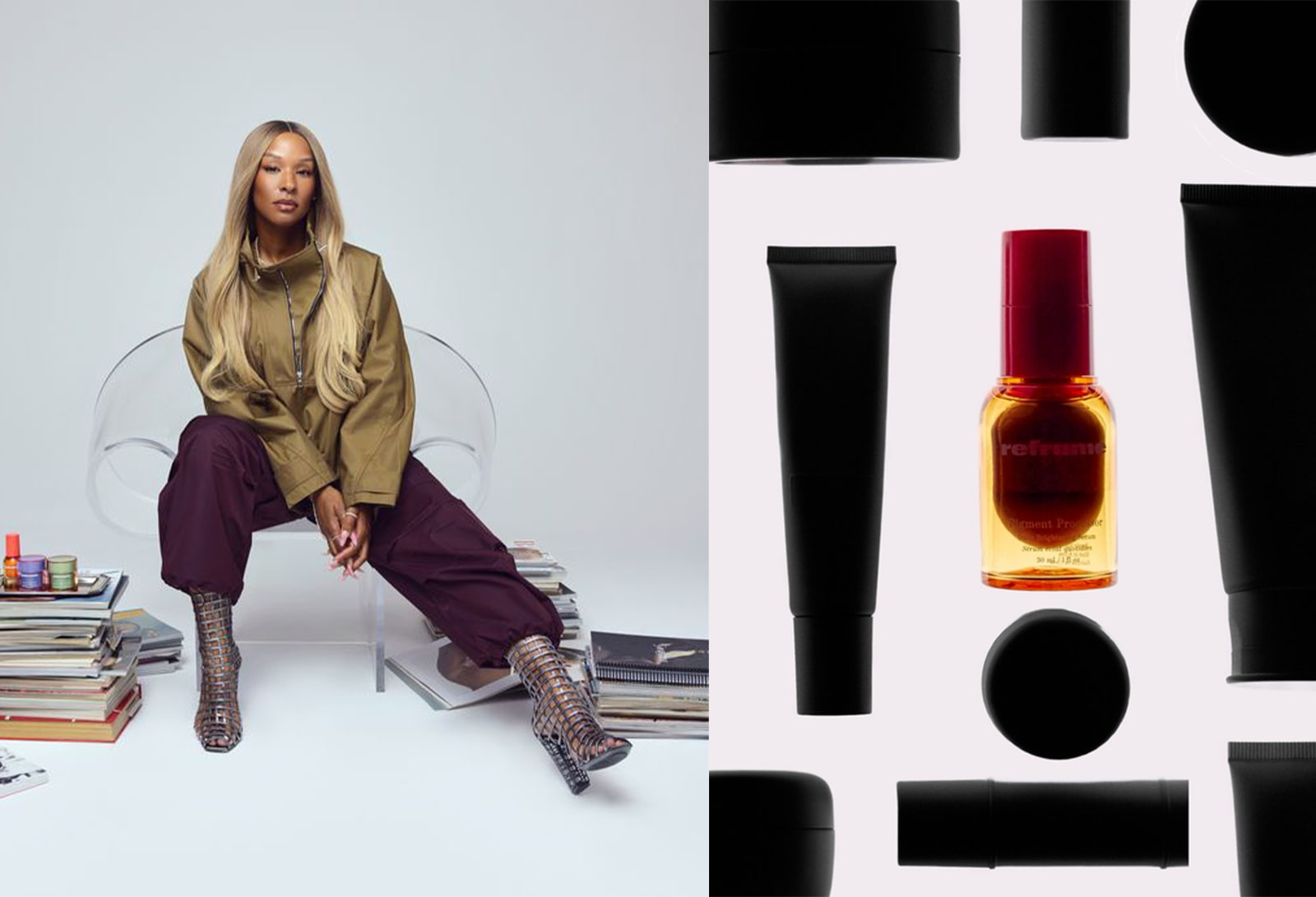
“I started this brand knowing that I wanted it to be slow and intentional,” James revealed. Reframe Beauty sold only through its own website at first. “Unfortunately, not to the UK yet, but we will get there.” In September this year, it began a US partnership with Violet Grey, which carries the brand exclusively. James said the deal covers five doors and a small number of SKUs sold in-store and on Violet Grey’s website. “They’re very curated, very intentional with who they bring in their doors.” She does not want to spread the brand too widely. “That’s not really [our] vibe.”
She said the slow rollout is based on data about her customers loving to shop more intentionally. “Again, I think that data is everything, and I think that whenever you are making these huge business decisions, you have to make sure that the data is matching, or else you are going to find yourself in a place that you can’t necessarily come out of,” she said, adding that she would rather have a demand than try to keep up with the demand.
Marketing has followed the same approach. Reframe Beauty started with personal relationships with creators, outreach, and gifting, so people who had used the products could talk about them. James said she changed course once she learned how expensive paid media is, but added, “We are absolutely getting there.”
She said the response improves once customers try the products and learn about the ingredients. The New York Times reported that her team cited third-quarter sales up at least 18%, along with a facial cleanser in development. James confirms, “We have some new products coming out.”
Reframe Beauty has no outside investors. “I fully funded this business so I didn’t have to worry about being rushed,” James said. “I didn’t want to have any restraints or parameters.” That sets the brand apart from much of the market. BeautyMatter’s Deal Index recorded 156 beauty transactions in the first half of 2026, up 32.2% YoY, with money going mainly to science-led innovation and founders building for the long term. The best-known recent founder exit is e.l.f. Beauty’s purchase of Hailey Bieber’s rhode for about $1 billion in May 2025.
James, however, does not rule out outside funding. “It is not, I don’t think, far-fetched in the future to have investors.” For now, she said, self-funding means “the timelines are not rushed, and I don’t feel like there’s like a fire under us to have to produce in a certain way.”
The model depends on keeping costs low. James credits a “small but mighty team” for keeping overhead down, since staffing is usually a brand’s highest cost. “I reinvest into the business,” she said, and she accepts that it will take a long time, or quite a bit of time, to see an upside. The company tracks its metrics against that timeline.
The main operating difficulty is coordination. Working with Korean partners means managing time-zone differences, and planning is still new to her. “This is my first time doing anything to this magnitude,” she said. She called herself a creature of habit and tends to stay with suppliers she trusts. “And again, like with anything, there are delays, but they’re handled with the utmost care, and that’s all I can ask for.”
Celebrity beauty brands have often launched with heavy marketing and wide retail and then struggled, so Reframe Beauty is testing whether going slower works better: with multiple testings in place before the marketing push, demand built before more doors, and James’s own money instead of investors’ deadlines. James said the reason for the brand is impact, not just being in the market. “Otherwise, what are you doing it for?” she asked conclusively.

Want to continue reading this article and others just like it?
Subscribe to BeautyMatter and access the most current beauty intelligence and news updates.
SubscribeAlready a member, login here.